


SEWING BASICS - HOW TO READ AND FOLLOW A PATTERN
- Susan

- Mar 5, 2018
- 2 min read
BUYING A PATTERN
If you've never bought a sewing pattern before then there are some things you should keep in mind to ensure a successful purchase. Normally I will either search online for a pattern that inspires me, or alternatively I'll go into Fabricland and look through the catalogues in person. There are many different companies that sell sewing patterns (and also have websites you can check out), such as McCalls, Burda, Simplicity, Vogue, and Butterick. I would highly recommend starting with a pattern if you are sewing at a beginner or intermediate level. Using a pattern is helpful for a variety of reasons; they come with step-by-step instructions that are easy to follow, they utilize markings and symbols that are important to learn (the difficulty of a pattern is often correlated to the amount of markings / details) and they help to provide an understanding of the proper shape for a pattern and how the different pieces fit together.

When you purchase a pattern it often includes pattern pieces for more than one design (these are usually labeled with letters - design A, design B, design C, etc.) and most of the pattern pieces are used to make more than one of the included designs. These pattern pieces come as large sheets of pattern paper (which is thin like tissue paper), and you will need to cut out all of the relevant pieces to the appropriate size (reference Sewing Basics - How to read and follow a pattern Part 2 - Markings and Symbols).
GETTING STARTED
So you've chosen a pattern and now you're trying to figure out how to get all of the information you need from it before you get started. All of the information to determine sizing, the type of fabric you'll need, the amount of fabric you'll need, and what notions you'll need can be found on the outside of the pattern package (on the back). The location of information on the back will be slightly different for different companies.
There will always be a sizing chart included on the back, for more details on how to read this chart reference my blog post Sewing Basics - Measuring Yourself.
There will be a guide indicating how much fabric you will need depending on your size (this is usually included within the sizing chart, and varies for different fabric widths). Additionally, a list of notions that are needed will be provided. For more information on this reference my blog post Sewing Basics - Buying Fabric & Notions.
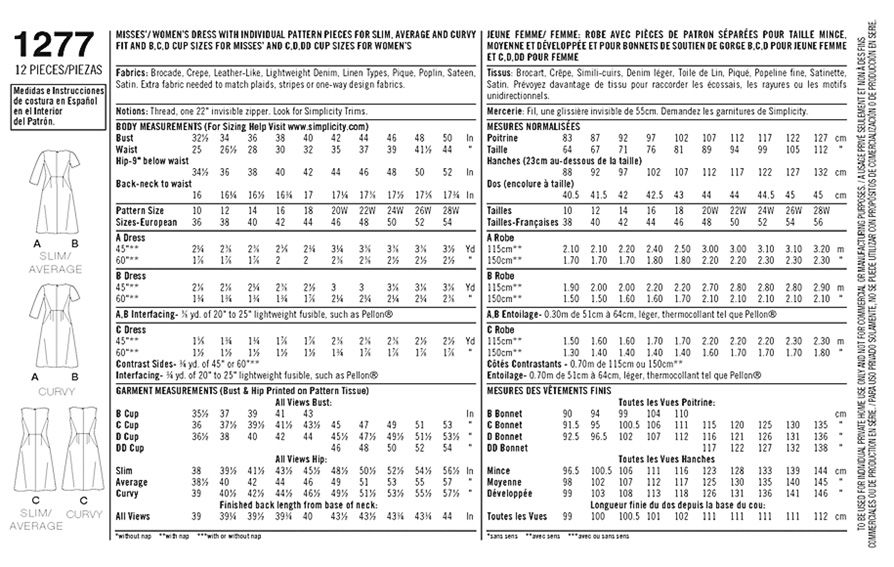
In Canada, sewing patterns will include both English and French. They also will likely provide measurements in both centimetres and inches, as well as fabric measurements in terms of yards and metres. So make sure you're using the correct measurement unit when getting information from a pattern.
Before you leave Fabricland ensure that you have your pattern, your fabric and your notions. Make sure to check Sip & Sew regularly for more information regarding sewing basics, and more!
-- Susan

Comments